Gunsan columnsHistory & ArchitectureGaejeong and Balsan-ri Heritage7 min read
Goryeo Stones Once Locked in a Farm Vault: The Time of the Balsan-ri Stone Lantern and Lee Yeong-chun House
We trace the modern history tied to the Goryeo stone lantern and five-story stone pagoda in Balsan-ri, Gaejeong-myeon, the former Japanese farm warehouse and Lee Yeong-chun House.

Just a short way east of the old downtown, traces of the large colonial-era farm belt and Goryeo stone heritage stand strangely face to face in one village.
We follow the deep history of the Gaejeong-myeon area. It includes Lee Yeong-chun House, a Japanese landowner's villa reborn as a cradle of rural medicine, and the Balsan-ri Stone Lantern and Five-story Stone Pagoda, treasures that were moved next to the Shimatani Farm vault. It ends at the site honoring General Choe Ho, Lord Chungwon.
The 6 places in this columnFull list

- Hours
- 10:00–17:00
- Closed days
- Closed every Monday

Stone Lantern in Balsan-ri, Gunsan
- Hours
- Always open
- Closed days
- Open all year
Five-story Stone Pagoda in Balsan-ri, Gunsan
- Hours
- Always open
- Closed days
- Open all year

- Closed days
- Open all year

Former Japanese Farm Warehouse in Balsan-ri, Gunsan
- Hours
- 10:00–17:00
- Closed days
- Open all year
- Hours
- 10:00–18:00 (call for details)
- Fee
- Free
Photos: Korea Tourism Organization · KOGL Type 3 (no changes allowed), KOGL Type 1
“Goryeo's stone pagoda and lantern, dragged in as garden ornaments for a Japanese farm owner, now stand before a school yard and a vault-like warehouse. They bear witness at once to imperial greed and a thousand years of time.”
From Kumamoto's Villa to a Lamp of Rural Health: Lee Yeong-chun House in Gaejeong-dong
Climb the forest path around Guam-ro in Gaejeong-dong and a unique wooden building appears, combining a Western exterior, Japanese tatami rooms and Korean heated-floor rooms under one roof. Kumamoto Rihei, one of the largest farm owners in colonial Joseon, built it as his villa around 1920. Today it is Lee Yeong-chun House.
This luxury villa is said to have been built with materials brought from Baekdusan Mountain and elsewhere, at a cost rivaling the Government-General's official residence of the time. After liberation, it came to write a completely different history. That is because Dr. Ssangcheon Lee Yeong-chun, called 'the Schweitzer of Korea', lived here. He led the Rural Hygiene Research Institute and Gaejeong Central Hospital and devoted his life to fighting tuberculosis and to rural medical service. It is a dramatic site where a space at the peak of exploitation was turned into a base for the benevolent art of saving lives.
- Lee Yeong-chun HouseHours 10:00–17:00
Goryeo Treasures Standing Beside a Reinforced Concrete Vault: The Balsan-ri Stone Lantern and Five-Story Stone Pagoda
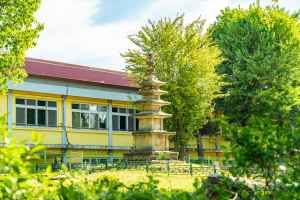
Move from Lee Yeong-chun House to Balsan-ri in Gaejeong-myeon and you meet a strange scene behind Balsan Elementary School. There stand the massive 2-story reinforced concrete former Japanese farm warehouse of Balsan-ri (National Registered Heritage) and the Goryeo stone relics that keep it company.
This warehouse is a kind of giant vault, built by the Japanese landowner who ran the Shimatani Farm under Japanese rule to store art and valuables he collected across the country. Its windows have iron bars, and it has an American-made vault door. More surprising are the pieces standing in the yard. They are the state-designated Treasure Balsan-ri Stone Lantern (thought to date from the early Goryeo period, around the 10th century), the Balsan-ri Five-story Stone Pagoda and the 6-sided Stupa in Balsan-ri, 175 cm tall. These relics originally stood at the Bongnimsa Temple Site in Wanju-gun, and the Japanese landowner hauled them away whole to decorate his farm garden. After liberation, a school was built on the farm site, and to this day they tell the story of heritage's ordeals from inside the school grounds.
- Lee Yeong-chun HouseHours 10:00–17:00
- 6-sided Stupa in Balsan-riClosed days Open all year
General Choe Ho Site, Honoring a Commander Who Guarded the Sea of Jinpo and the Hills of Gaejeong
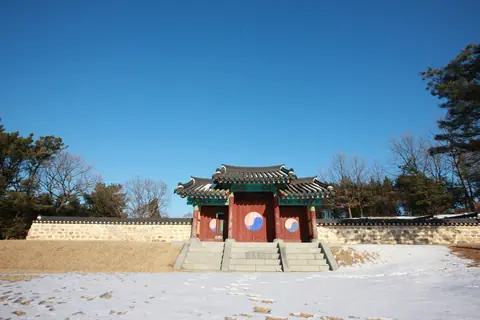
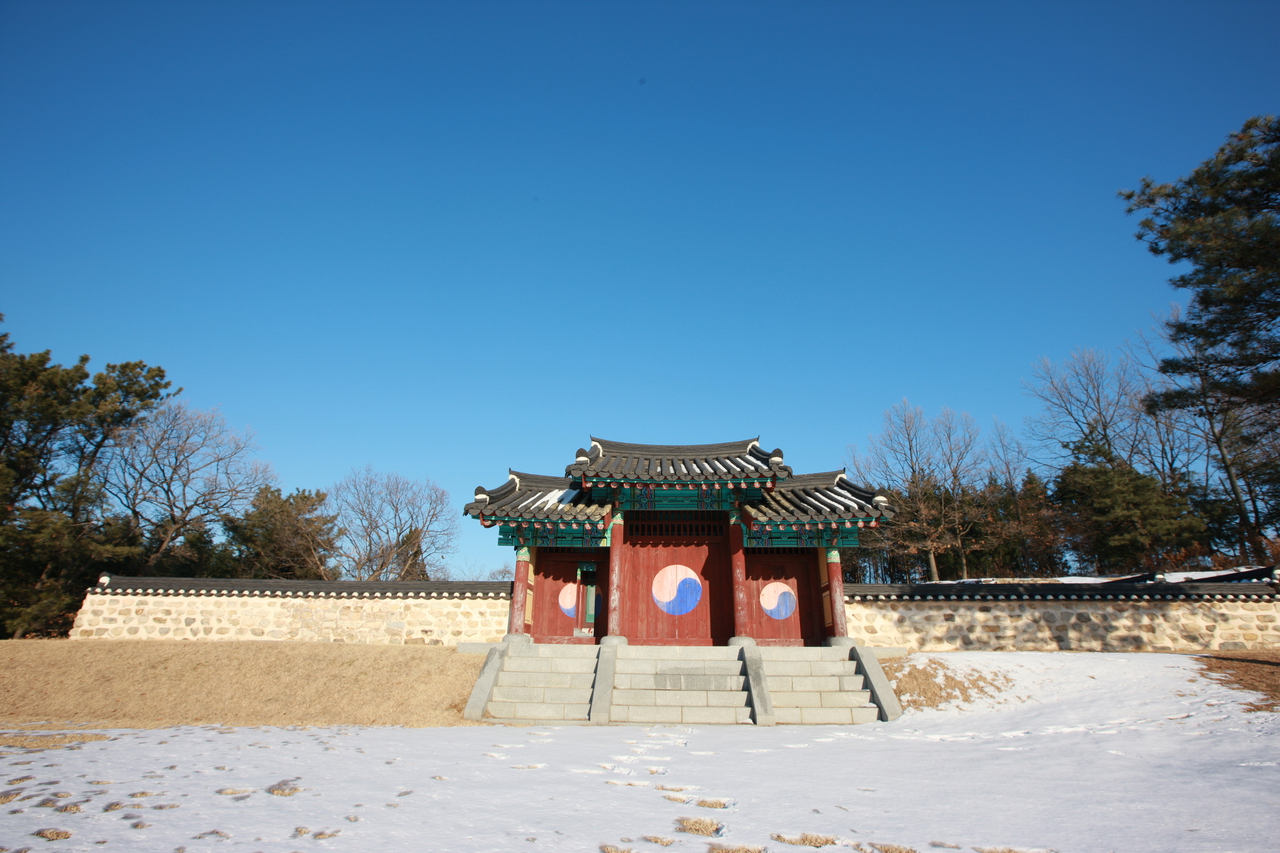
Time in Balsan-ri does not stop at the modern era. On the hillside of Balsan-ri (46 Bareume-gil) is the General Choe Ho Site, a provincial monument that enshrines the spirit tablet of General Choe Ho (Lord Chungwon), a military officer under King Seonjo of Joseon.
It is a shrine honoring General Choe Ho's loyalty. In the 29th year of King Seonjo (1596), he put down the rebellion of Yi Mong-hak and was named a Merit Subject for Quelling the Rebellion. In 1597 he fought to the end in the sea battle of Chilcheollyang and died a martyr. Look around the quiet red spiked gate and the shrine, and you can calmly take in a scene where Goryeo stone art, Joseon loyalty and modern pain overlap in one village.
- General Choe Ho SiteFee Free
A Half-Day Humanities Tour to Gaejeong-myeon, Away from the Old Downtown Crowds
Gaejeong-dong and the Balsan-ri area are a little over 15 minutes by car from the old downtown, but with few tour groups, they are ideal for walking and reflecting. Set aside half a day, morning or afternoon. We suggest seeing Lee Yeong-chun House first, then moving on to Balsan-ri and linking in turn the former Japanese farm warehouse, the Balsan-ri Stone Lantern, Five-story Stone Pagoda and 6-sided Stupa, and the General Choe Ho Site.
The Balsan-ri relics adjoin the grounds of Balsan Elementary School, so during weekday class hours please take care to keep quiet as you look around.
- Lee Yeong-chun HouseHours 10:00–17:00
- General Choe Ho SiteFee Free
The 6 places in this column
-
1
Modern cultural heritage built around 1920 as the villa of the Japanese landowner Kumamoto. After liberation, Dr. Ssangcheon Lee Yeong-chun lived here, and it became a cradle of rural medicine.
- Hours
- 10:00–17:00
- Closed days
- Closed every Monday
- Fee
- Not listed

-
2
Stone Lantern in Balsan-ri, Gunsan
An early Goryeo stone lantern believed to date from around the 10th century. A national Treasure, it was moved in the colonial period from the Bongnimsa Temple site in Wanju to the Balsan-ri farm.
- Hours
- Always open
- Closed days
- Open all year
- Fee
- Free

-
3
Five-story Stone Pagoda in Balsan-ri, Gunsan
A Goryeo stone pagoda notable for its neat proportions. Together with the Balsan-ri stone lantern, it was designated a national Treasure in 1963.
- Hours
- Always open
- Closed days
- Open all year
- Fee
- Free
-
4
A hexagonal Goryeo stone stupa 175 cm tall. Standing beside the stone lantern and five-story pagoda, it is provincially designated cultural heritage material.
- Hours
- Not listed
- Closed days
- Open all year
- Fee
- Not listed

-
5
Former Japanese Farm Warehouse in Balsan-ri, Gunsan
A 2-story reinforced concrete vault-like warehouse built by a colonial-era farm owner to store valuables and cultural assets. It became National Registered Heritage in 2005.
- Hours
- 10:00–17:00
- Closed days
- Open all year
- Fee
- Free

-
6
A provincial monument shrine in Gaejeong-myeon that enshrines the spirit tablet of General Choe Ho, a commander active in the Imjin War and the Jeongyu War.
- Hours
- 10:00–18:00 (call for details)
- Closed days
- Not listed
- Fee
- Free
Photos: Korea Tourism Organization · KOGL Type 3 (no changes allowed), KOGL Type 1