Gunsan columnsHistory & ArchitectureFilm Locations and Their Spaces6 min read
The Gunsan Alleys the Camera Loved: Reading the City's Spaces Through Five Films
From Chowon Photo Studio to Binhaewon and Gyeongam-dong Railroad Village, we look at the 5 Gunsan filming locations behind memorable scenes in Korean film.

Gunsan's old downtown and railway are a natural cinema.
Without building new sets, they call up the decades from the 1930s to the 1990s on screen. We follow the Gunsan spaces the camera lens caught: Chowon Photo Studio from Christmas in August, the Sinheung-dong house from Tazza: The High Rollers, and Binhaewon and Gyeongam-dong Railroad Village from When a Man Loves.
The 5 places in this columnFull list

- Hours
- 09:00–21:00 (winter, November–February)
- Closed days
- Open all year
- Signature dishes
- Black bean noodles
- Hours
- 10:00–21:00

Gyeongam-dong Railroad Village
- Hours
- Always open
- Closed days
- Open all year

Japanese-style House in Sinheung-dong, Gunsan (Hirotsu House)
- Hours
- 10:00–17:00Last entry 20 minutes before closing more
- Closed days
- Every Monday
- Hours
- 10:00–17:00
- Closed days
- Every Monday
Photos: Korea Tourism Organization · KOGL Type 3 (no changes allowed), KOGL Type 1
“Gunsan became the backdrop of so many films not for flashy sights, but because every alley and building still holds a texture of time that has not been erased.”
Chowon Photo Studio: From a Converted Garage Set to a Place of Lasting Memory
Director Hur Jin-ho's film Christmas in August was released in 1998. Chowon Photo Studio held the short season of the photographer Jung-won (Han Suk-kyu) and the parking enforcement officer Da-rim (Shim Eun-ha), but it was never a real photo studio. The crew found the garage of an old house in a quiet, tree-shaded alley on Guyeong 2-gil and turned it into a photo studio set.
The building was torn down after filming, and Gunsan City restored it and opened it in its current form. The name 'Chowon' (meadow) comes from the name of a photo studio in the neighborhood where actor Han Suk-kyu lived as a child. Inside, the studio room where funeral portraits were taken, old cameras, an electric fan and albums are arranged just as they were framed in the film. Under the street tree in front of the studio stands the red Tico car that Da-rim drove.
- Chowon Photo StudioClosed days Open all year
The General's Son and Tazza: A Wooden House in Sinheung-dong as a Period-Film Stage
The Japanese-style House in Sinheung-dong, Gunsan, a little over two blocks from Chowon Photo Studio, is the place Korean period films have called on most often. Director Im Kwon-taek's The General's Son came first. Then came the mansion scene in director Choi Dong-hoon's Tazza: The High Rollers, where Pyeong Gyeong-jang (Baek Yoon-sik) and Goni (Jo Seung-woo) trade flower cards, and the film Fighter in the Wind. All were shot against the garden and tatami rooms of this house.
The L-shaped 2-story wooden roof, the mossy stone lantern and the carefully tended Japanese garden create the air of the 1930s–1940s without any added set dressing. Now, to preserve the cultural heritage, only the outer garden path is open instead of the interior. Still, just standing in the middle of the yard and looking up at the wooden window lattices and eaves brings the tension of the films vividly back to life.
- Chowon Photo StudioClosed days Open all year
Binhaewon, a Two-Level Chinese Restaurant, and the Red-Brick Honam Customs Museum
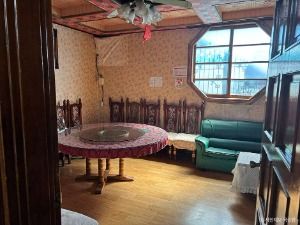
Step through the door of Binhaewon, a long-running Chinese restaurant in Jangmi-dong, and you feel as if you have walked into a classic film. Since its founding in the early 1950s, it has kept traces of ethnic Chinese culture. From the 1st floor you look straight up to the 2nd-floor railing in a tall two-level hall with red lanterns and ornate painted ceiling decoration. Thanks to these, it became a main filming location for Tazza: The High Rollers and When a Man Loves.
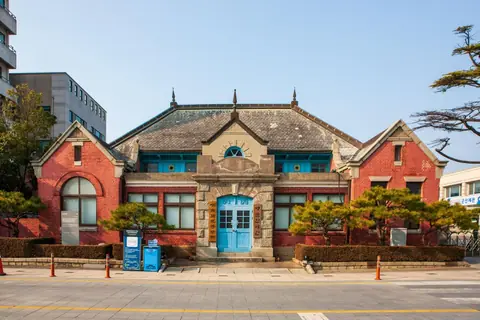
Walk west from Binhaewon along Haemangno and another cinematic scene awaits: the Former Gunsan Customs House Main Building (Honam Customs Museum). This classical building of Belgian red brick with a copper roof was completed in 1908. It appears as a weighty period backdrop in films such as Nameless Gangster: Rules of the Time and completes the cool mise-en-scène unique to an open port.
- BinhaewonHours 10:00–21:00
- Honam Customs MuseumHours 10:00–17:00
A 2.5 km Rail Line Where the Whistle Stopped: The Nostalgia of Gyeongam-dong Railroad Village
Head east from the old downtown and you reach Gyeongam-dong Railroad Village, where the two leads of When a Man Loves walked while sharing an ice cream. Shacks stand eave to eave on both sides of a 2.5 km rail line laid in 1944 to carry freight between a paper mill and Gunsan Station.
Since trains stopped running in 2008, the whistle is gone. But the tracks with their sleepers still in place and the worn walls keep the feel of the alleys of the 1970s–1980s. Start with the 1990s mood of Chowon Photo Studio, then the 1930s of the Sinheung-dong house, the 1950s of Binhaewon and the 1970s of the railroad village. A walk linking Gunsan's filming locations is a journey across the eras of modern Korean history.
- Gyeongam-dong Railroad VillageHours Always open
- Chowon Photo StudioClosed days Open all year
- BinhaewonHours 10:00–21:00
The 5 places in this column
-
1
A restored photo studio made from a converted garage for the film Christmas in August. The cameras and props of the time are displayed as they were.
- Hours
- 09:00–21:00 (winter, November–February)
- Closed days
- Open all year
- Fee
- Free

-
2
Japanese-style House in Sinheung-dong, Gunsan (Hirotsu House)
A colonial-period 2-story wooden house and garden that served as the setting for The General's Son, Tazza: The High Rollers and Fighter in the Wind.
- Hours
- 10:00–17:00Last entry 20 minutes before closing more
- Closed days
- Every Monday
- Fee
- Free

-
3
A National Registered Heritage that keeps the original form of a 1950s ethnic Chinese restaurant. Its two-level hall, where Tazza: The High Rollers and When a Man Loves were filmed, makes a strong impression.
- Signature dishes
- Black bean noodles
- Hours
- 10:00–21:00
- Closed days
- Closed every Monday

-
4
A red-brick customs building in Western classical style, built in 1908. It is a regular backdrop for period films and a highlight of modern architecture.
- Hours
- 10:00–17:00
- Closed days
- Every Monday
- Fee
- Free
-
5
Gyeongam-dong Railroad Village
An alley where a 2.5 km rail line laid in 1944 meets old houses. It is also widely loved as a filming location of When a Man Loves.
- Hours
- Always open
- Closed days
- Open all year
- Fee
- Free

Photos: Korea Tourism Organization · KOGL Type 3 (no changes allowed), KOGL Type 1