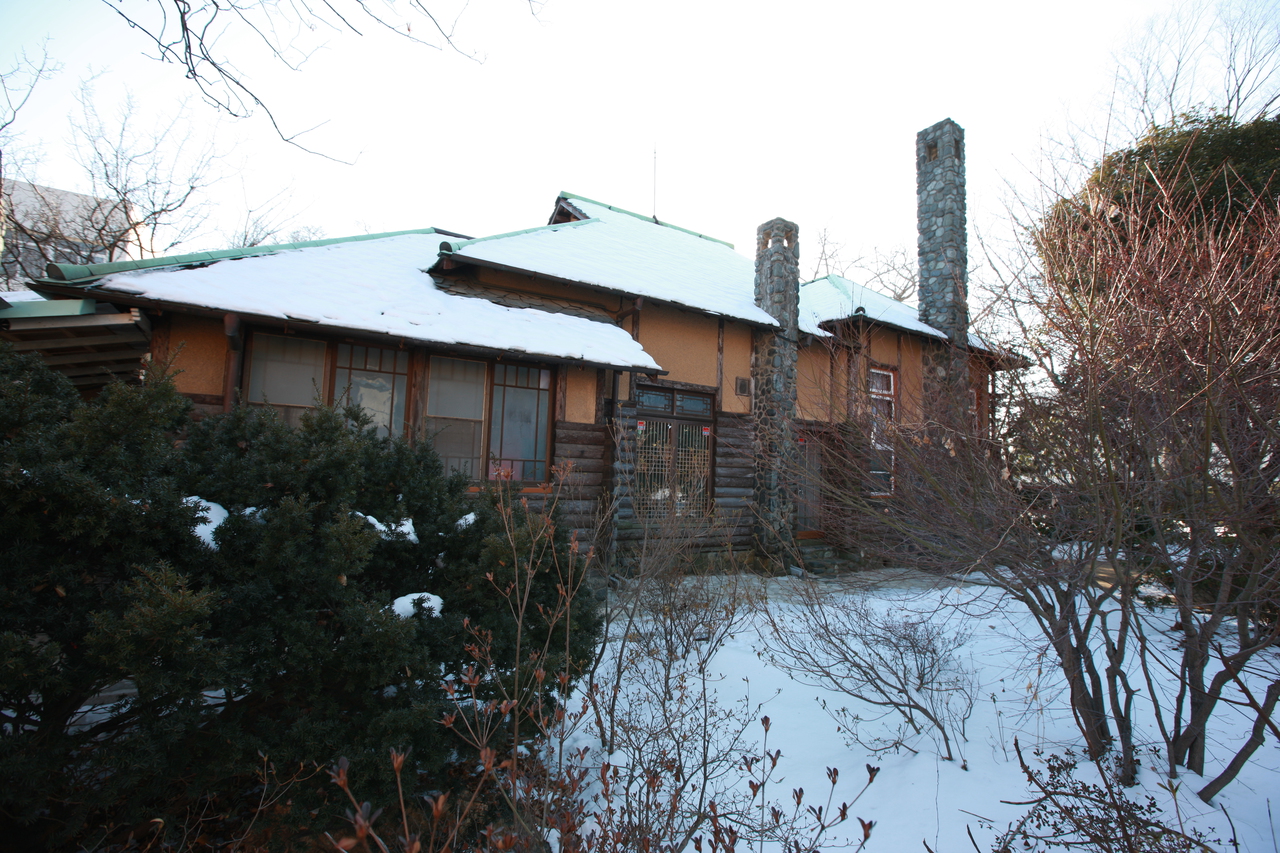
Built around 1920 as the villa of Kumamoto, a large Japanese landowner, it is a 1-story wooden building that mixes Western, Japanese, and Korean elements, and it became Jeollabuk-do Tangible Cultural Heritage No. 200 in 2003. You can visit 10:00–17:00 from Tuesday to Sunday; it is closed on Mondays.
Source: Korea Tourism Organization · KOGL Type 3 (no changes allowed) · 2 photos
2 photos ↓ · Source: Korea Tourism Organization · KOGL Type 3 (no changes allowed), KOGL Type 1
Lee Yeong-chun House Today
Worked out per date
Nov 4 (Wed)
Open · 10:00–17:00
060912151822
Sunset
17:35
Sunrise 06:58
Crowd forecast
100 = this place at its busiest
27.37 · Quiet
Forecast by Korea Tourism Organization · received Oct 31
Crowd forecast: A relative forecast where 100 is this place at its busiest; not for comparing places. Quiet 0–39 · Moderate 40–69 · Busy 70 and over — bands set by this site
Tourist information in Gunsan: 8 tourist information centers, free tours by culture and tourism guides and the 47-point Gunsan stamp tour, with hours, departure times and completion rules
Lee Yeong-chun House in detail
Lee Yeong-chun House was built around 1920 as the villa of Kumamoto
Lee Yeong-chun House is a house built around 1920 as a villa by Kumamoto, a large Japanese landowner. From 1935, Dr. Lee Yeong-chun, who served as director of Gaejeong Hospital, was entrusted with the house and lived in it, which gave it its current name. After liberation in 1945, it was owned by the Korea Rural Hygiene Institute, a foundation Dr. Lee set up. Its current owner is the Gyeongam school foundation.
Lee Yeong-chun House materials: a round-stone base, a log frame of larch from Baekdusan Mountain and a natural slate roof
The Lee Yeong-chun House roof combines gable and hipped forms and is finished with natural slate. In this single-story wooden building, round stones were used to build the base and the fireplace chimney. The outer walls have exposed posts and are made of red clay mixed with lime. On the lower part of the outer walls, a log frame of Baekdusan Mountain larch, sawn in half and fitted with half-lap joints, was added.
Lee Yeong-chun House living room: bay window, stained glass, and Western-style fireplace
Inside the entrance of Lee Yeong-chun House, the north wall of the living room has a Western-style fireplace. A wide bay window lets you look out on the garden from the living room, and the top of the window is decorated with stained glass. Some parts have changed, but the building's structure, its interior and exterior layout, and its decoration remain relatively close to the original. It was designated Jeollabuk-do Tangible Cultural Heritage No. 200 on October 31, 2003. It is now used as an exhibition hall (the Dr. Ssangcheon Lee Yeong-chun Exhibition Hall).
Who Dr. Lee Yeong-chun was: a 1929 Severance Medical College graduate who worked on rural health and education
The person whose name Lee Yeong-chun House bears is Dr. Lee Yeong-chun, a doctor from Yonggang-gun, South Pyongan Province. He went to Pyongyang Higher Common School and graduated from Severance Union Medical College in 1929. He treated patients and ran hygiene projects in farming and fishing villages. He founded schools to educate people in farming and fishing villages, and he founded an infant home to raise abandoned children. He received the Korean Red Cross Service Award and the Order of Cultural Merit of the Republic of Korea, and he was posthumously awarded the Order of Civil Merit, Mugunghwa Medal.
What movies or dramas were filmed at Lee Yeong-chun House?
'Freezing Point,' 'Moraesigye,' 'Rustic Period' and others were filmed here. source 1
What are the visiting hours and closing days of Lee Yeong-chun House?
You can visit 10:00–17:00. It is closed every Monday. source 2
Can I park at Lee Yeong-chun House?
Yes. You can park, and it is free. source 1
Why is it called Lee Yeong-chun House?
Because Dr. Lee Yeong-chun lived in the house and looked after it. Dr. Lee served as director of Gaejeong Hospital. While living here, he changed the tatami rooms into heated-floor rooms and remodeled the kitchen for standing use. source 2
What style is Lee Yeong-chun House built in?
Western, Japanese and Korean styles are mixed in one building. It has a Western-style entrance and reception room, a Japanese-style main bedroom and caretaker's quarters with heated-floor rooms. The living room has a wide bay window looking out on the garden, stained glass decoration and a Western-style fireplace. source 2
Who was Dr. Lee Yeong-chun, who lived at Lee Yeong-chun House?
He was a physician and social worker. He carried out medical care and hygiene work in rural and fishing villages, and he founded schools and an infant home. He was from Yonggang-gun, South Pyeongan Province, and graduated from Severance Medical College in 1929. source 2
When was Lee Yeong-chun House designated cultural heritage?
On October 31, 2003. That day it became Jeollabuk-do Tangible Cultural Heritage No. 200, and it is now used as an exhibition hall (the Dr. Ssangcheon Lee Yeong-chun Exhibition Hall). source 2
Who owns Lee Yeong-chun House now?
The Gyeongam school foundation owns it. After liberation, it belonged to the Korea Rural Hygiene Institute, a foundation set up by Dr. Lee Yeong-chun. source 2
Are there Gunsan City travel courses that include Lee Yeong-chun House?
Yes. These courses from Gunsan City's culture and tourism site stop at Lee Yeong-chun House: Course B (Modern–Geumgang Area), Course C (Modern History and Gunsan Nature and Ecology), the 2-Night, 3-Day Course, and the History Site Walk Course. source 2




 Pureudeonstraight-line 950 m