On the summit are the Tombs of the Five Sages, five tombs for five Baekje generals.
Source: Korea Tourism Organization · KOGL Type 1 · 6 photos
Oseongsan Mountain Today
Worked out per date
Nov 4 (Wed)
Open at all times
Sunset
17:35
Sunrise 06:58
Crowd forecast
100 = this place at its busiest
31.79 · Quiet
Forecast by Korea Tourism Organization · received Oct 31
Crowd forecast: A relative forecast where 100 is this place at its busiest; not for comparing places. Quiet 0–39 · Moderate 40–69 · Busy 70 and over — bands set by this site
The name Oseongsan Mountain appears to come from the Tombs of the Five Sages, the tombs of five generals on the summit. The evidence is in the Yeojidoseo, compiled in 1760. It records that villages around Oseongsan Mountain held memorial rites for five generals. It also records that these generals died on this mountain when the Silla–Tang allied forces attacked Baekje.
The 227 m summit of Oseongsan Mountain and the Tombs of the Five Sages, five tombs side by side
The summit of Oseongsan Mountain is 227 m high. On it, side by side, are the Tombs of the Five Sages, five tombs for five Baekje generals who died defending their country. Standing at the Tombs of the Five Sages, you can see the Geumgang River below the mountain to the north and Chungcheongnam-do across it. To the west you can see the islands of Gogunsan Islands. To the east are Mireuksan Mountain in Iksan and Moaksan Mountain in Jeonju. To the south are the Mangyeong and Dongjin rivers and Ugeum Rock on Naebyeonsan Mountain in Buan.
The story of Su Dingfang and the five old men behind the Tombs of the Five Sages on Oseongsan Mountain
The origin story of the Tombs of the Five Sages on Oseongsan Mountain, recorded in the 18th-century Yeojidoseo, is the story of the Tang general Su Dingfang and five old men. Su Dingfang had his troops camp below Oseongsan Mountain. Lost in a yellow fog, he asked five old men the way to Sabi. They refused, saying they could not show the way to an enemy who had come to attack their country. In anger, Su Dingfang beheaded the old men. But when he withdrew his troops, he saw their steadfast loyalty as remarkable and buried them on the mountain. This story is handed down together with the Battle of Gibeolpo, the first battle the Silla–Tang allied forces fought in Gunsan.
The Baekje generals buried at the Tombs of the Five Sages on Oseongsan Mountain and the Battle of the Ungjin River on July 9, 660
The Tombs of the Five Sages on Oseongsan Mountain are thought to belong to Baekje generals who fought in the Battle of the Ungjin River. That battle was the clash between the Baekje and Tang armies in Gunsan on July 9, 660. They met the enemy on Oseongsan Mountain, which guarded the Geumgang River, the gateway to Baekje. Taken prisoner, they refused Su Dingfang's attempts to win them over and were killed. They are believed to have been buried afterward at the top of Oseongsan Mountain Fortress, where the tombs are now. Oseongsan Mountain Fortress has not yet been restored, so it is hard for ordinary visitors to make out the fortress site.
The summit of Oseongsan Mountain is 227 m high. On the summit, side by side, are the five tombs of the Tombs of the Five Sages, which honor five Baekje generals. source 1
Can I climb Oseongsan Mountain at any time?
Yes. Oseongsan Mountain is always open, has no closing days all year and is free to use. Parking is also available. For inquiries, contact the Gunsan Tourist Information Center at 063-446-5114. source 2
Were the Tombs of the Five Sages on Oseongsan Mountain in their current place before the restoration project?
Yes. The five tombs of the Tombs of the Five Sages on Oseongsan Mountain were near their current place even before the restoration project. Footage taken before the restoration shows the five tombs recorded in the Yeojidoseo, with lower mounds than today. source 1


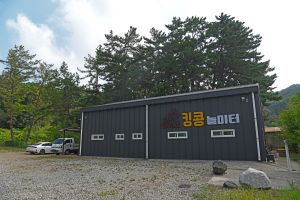 King Kong Playgroundstraight-line 1.1 km

 Geumgang Wetland Ecological Parkstraight-line 1.8 km


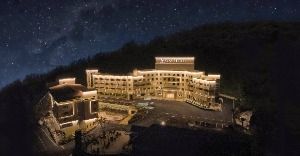 Gunsan Stay Tourist Hotelstraight-line 2.0 km