Gunsan columnsGlobal & Literary PerspectivesGeumgang Estuary and a Literary Coastal Walk5 min read
Where the Geumgang River Meets the West Sea: From the Riverside of the Novel Tangnyu to the Bieung Mapaji Trail
A Geumgang River and West Sea course that starts at the Chae Man-sik Literary Museum and the March 1st Movement memorial hall and runs to the coastal deck of the Bieung Mapaji Trail.
Gunsan's riverside, where the Geumgang River flowing along the border of Chungcheong-do and Jeolla-do opens into the West Sea, is where Tangnyu, a masterpiece of modern Korean literature, was born.
It is also the historic site where the first March 1st independence movement in Honam blazed. Following the water from the Chae Man-sik Literary Museum and Guam-dong Hill on the Geumgang River to the Bieung Mapaji Trail coastal path in the West Sea wind, we widen the map of Gunsan.
The 5 places in this columnFull list

- Hours
- March–October 09:00–18:00 (last entry 17:30)November–February 09:00–17:00 (last entry 16:30)
- Closed days
- Every Monday more
- Hours
- Always open
- Closed days
- Open all year
March 1st Movement 100th Anniversary Memorial Hall
- Hours
- Summer 09:00–18:00 (last entry 17:30)Winter 09:00–17:00 (last entry 16:30) more
- Closed days
- Every Monday more

Geumgang Future Experience Center
- Hours
- March–October 09:00–18:00 (last entry 17:30)November–February 09:00–17:00 (last entry 16:30)
- Closed days
- Every Monday (if Monday is a public holiday, it opens and closes the next weekday instead), January 1

Jinpo Great Victory Memorial Tower
- Hours
- Always open
- Closed days
- Open all year

Photos: Korea Tourism Organization · KOGL Type 3 (no changes allowed), KOGL Type 1
“In Chae Man-sik's sentences, the muddy waves of the Geumgang estuary became a portrait of an era. For travelers walking the riverside today, they become the widest horizon opening to the West Sea.”
Chae Man-sik and the Time of the Geumgang River, Read in a Bow-Shaped Literary Museum
Head east from the inner harbor along Gangbyeon-ro and you see an exhibition hall shaped like a ship's bow on the riverbank overlooking the Geumgang River. It is the Chae Man-sik Literary Museum, which honors the literary world of the novelist Baengneung Chae Man-sik (1902–1950), born in Gunsan.
Tangnyu is a full-length novel set in 1930s Gunsan. In its opening, the author sharply captured the colonial capitalism of the time through the mighty Geumgang River turning a cloudy yellow at the estuary. Inside the museum, the author's handwritten manuscripts, letters and a chronology of his works are laid out like a panorama. Visit after seeing the banks and the site of the rice exchange on Haemang-ro, and the city's spaces and the novel's sentences fit together as one.
- Chae Man-sik Literary MuseumClosed days Every Monday
Guam-dong Hill, Where the First Hurrah South of the Hangang River Rang Out
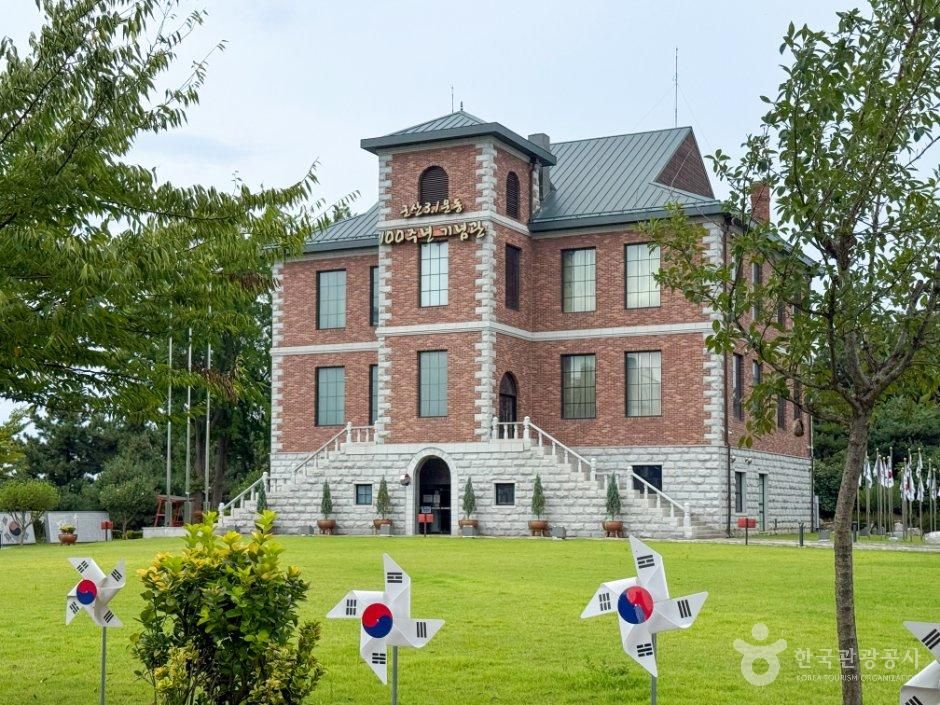
On Guam-dong Hill, not far from the Chae Man-sik Literary Museum, stands the March 1st Movement 100th Anniversary Memorial Hall, which recreates the old Guam Church building. The Gunsan March 5 independence movement, on March 5, 1919, was the first independence movement south of the Hangang River. It began with teachers and students of the former Yeongmyeong School and members of Guam Church. It is a history of resistance: by May, about 30,000 citizens had joined in 28 rounds of protest.
Inside the memorial hall are a model of the mimeograph used at the time to print Korean flags and the Declaration of Independence, along with historical records. Travelers who have mostly seen the traces of exploitation at the open port will meet here on Guam-dong Hill Gunsan's memory of self-driven resistance to Japan and of community.
- Chae Man-sik Literary MuseumClosed days Every Monday
- March 1st Movement 100th Anniversary Memorial HallClosed days Every Monday
The Waters of the Geumgang Estuary Bank and a Riverside Park Honoring the Jinpo Great Victory
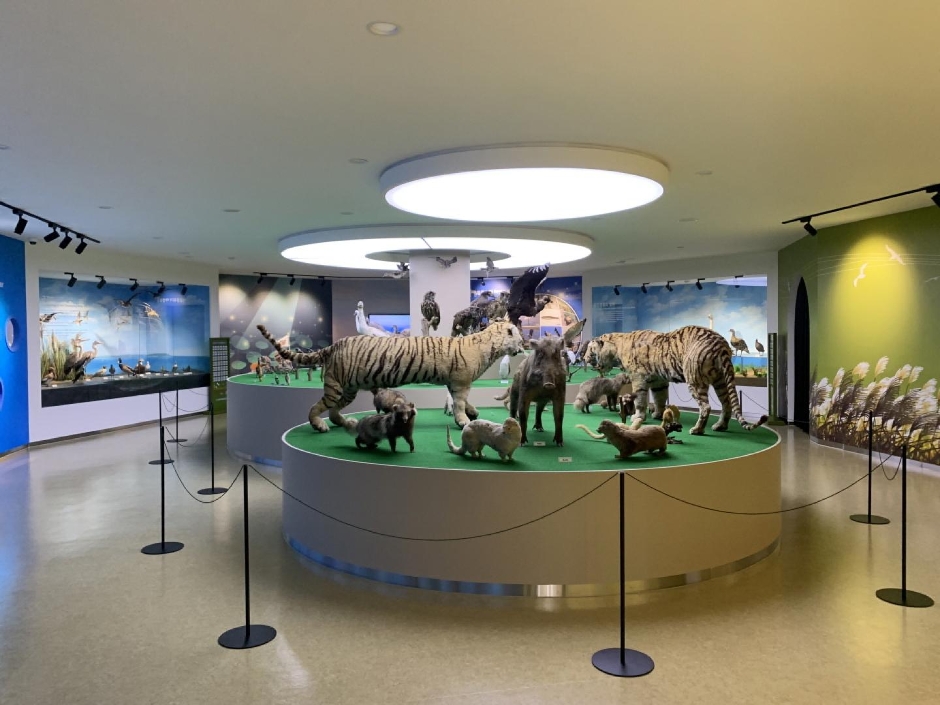
Follow the river further east from Guam-dong Hill, and the Geumgang Future Experience Center and the Jinpo Great Victory Memorial Tower appear one after another around the Geumgang Estuary Bank. The Geumgang Future Experience Center, a remodel of the former Geumgang Migratory Bird Observatory, is a hands-on exhibition hall on the ecosystem of the Geumgang River estuary and climate change. It is a good place to understand the natural environment of the brackish zone where river and sea meet.
In nearby Seongsan-myeon, the Jinpo Great Victory Memorial Tower is a 22 m monument. It honors the Jinpo Great Victory of 1380, the 6th year of King U of Goryeo, when General Choe Mu-seon destroyed more than 500 Japanese ships with cannons he had made himself. The sculpture gives form to August and the 18th to mark the day of the battle. In front of it, the broad surface of the Geumgang River and a migratory bird habitat open out.
- Geumgang Future Experience Center
- Jinpo Great Victory Memorial TowerHours Always open
A Sea-Cliff Deck Where the South Wind Lingers: The Bieung Mapaji Trail
To end the long riverside journey of the Geumgang River estuary with the sound of West Sea waves, head to the Bieung Mapaji Trail at Bieung Port on the western end. This coast has long been called 'Mapaji' because it takes the south wind head-on. Along its cliffs run a coastal path 1.8 km long in total and observation rest areas.
It is easy to reach and has ample parking, so anyone can walk it comfortably. By day you can enjoy the West Sea horizon and people fishing, and at night the soft lighting that comes on along the coastal deck. This route starts at the inner harbor and the Geumgang riverside described in Tangnyu and heads to the open West Sea horizon of Mapaji Trail. It shows another charm of Gunsan beyond the old downtown.
- Bieung Mapaji TrailHours Always open
The 5 places in this column
-
1
A bow-shaped literary museum on the Geumgang River shore. You can see Tangnyu, the novel set in Gunsan, and Chae Man-sik's handwritten manuscripts.
- Hours
- March–October 09:00–18:00 (last entry 17:30)November–February 09:00–17:00 (last entry 16:30)
- Closed days
- Every Monday more
- Fee
- Adults: 500 wonCombined ticket: Adults 5,000 won more
-
2
March 1st Movement 100th Anniversary Memorial Hall
A historical memorial hall built in the form of the old Guam Church on Guam-dong Hill, the birthplace of the Gunsan March 5 independence movement, the first independence movement south of the Hangang River.
- Hours
- Summer 09:00–18:00 (last entry 17:30)Winter 09:00–17:00 (last entry 16:30) more
- Closed days
- Every Monday more
- Fee
- Adults 500 wonCombined ticket: Adults 5,000 won more
-
3
Geumgang Future Experience Center
A climate and ecology experience center near the Geumgang Estuary Bank. It explains the ecosystem of the Geumgang estuary and changes in its waterways in an easy-to-follow way.
- Hours
- March–October 09:00–18:00 (last entry 17:30)November–February 09:00–17:00 (last entry 16:30)
- Closed days
- Every Monday (if Monday is a public holiday, it opens and closes the next weekday instead), January 1
- Fee
- Adults 2,000 wonCombined ticket: Adults 5,000 won more
-
4
Jinpo Great Victory Memorial Tower
A 22 m sculptural tower built on a hill overlooking the Geumgang River to commemorate General Choe Mu-seon's cannon victory in 1380.
- Hours
- Always open
- Closed days
- Open all year
- Fee
- Free

-
5
A coastal trail where a 1.8 km deck and observatories run along the sea cliffs of Bieung Port. Both the daytime sea views and the night lighting are beautiful.
- Hours
- Always open
- Closed days
- Open all year
- Fee
- Not listed

Photos: Korea Tourism Organization · KOGL Type 1, KOGL Type 3 (no changes allowed)